For renters in small apartments, adhesive hooks are the closest thing to a universal storage tool. They add hanging capacity to any smooth surface, cost very little, and come off without damaging the wall or costing you your deposit. These small apartment organization hacks using Command hooks cover both the technique that makes them actually hold and the specific places they add the most storage.
Most complaints about adhesive hooks come down to two errors: applying them incorrectly and overloading them. Get those right and a set of hooks will hold reliably for years. The sections below start with the technique, because everything else depends on it, then move room by room through the best uses.
Apply Them Correctly or They Will Fail
Nearly every adhesive hook failure traces back to a surface that was not properly prepared. Skipping this step is why people conclude the hooks "do not work."
Wipe the mounting spot with rubbing alcohol, not household cleaner. Standard sprays leave a residue that prevents the adhesive from bonding, while alcohol removes oils and evaporates clean. Let the surface dry completely before applying the strip.
Press the hook firmly against the wall for a full thirty seconds, then wait at least one hour before hanging anything on it. The adhesive needs that time to cure into a proper bond. Loading a hook immediately is the second most common cause of failure, and it is entirely avoidable with a little patience.
Respect the Weight Limit
Adhesive hooks come with a stated weight rating, and unlike screws, that number is not a suggestion. Exceeding it does not just drop your item — it can peel paint on the way down.
Check the packaging and choose the hook size to match the load: small hooks for keys and lightweight items, medium for towels and bags, large for coats and heavier gear. When in doubt, size up or distribute the weight across two hooks rather than trusting one.
Remember that the load is dynamic, not static. A bag that weighs two pounds sitting still exerts more force when you yank it off the hook in a hurry. Leave a margin below the rated limit for real-world use.
Build an Entryway Drop Zone
The highest-value use of adhesive hooks in a small apartment is right by the front door, where keys, bags, and coats otherwise pile onto counters and chairs.
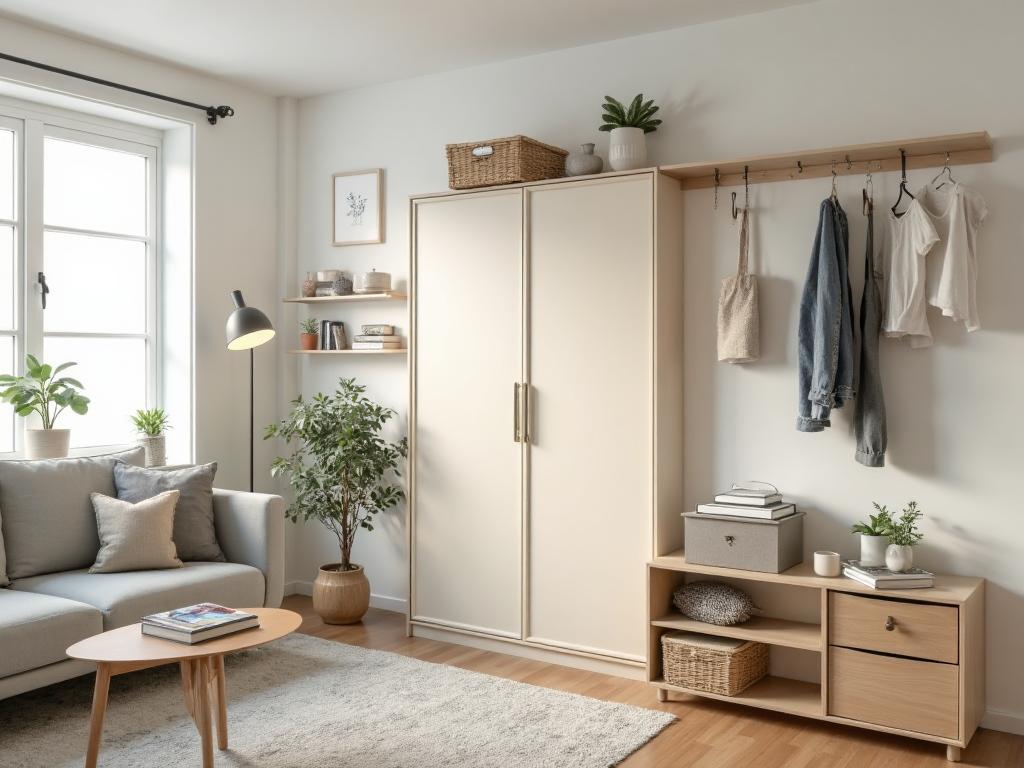
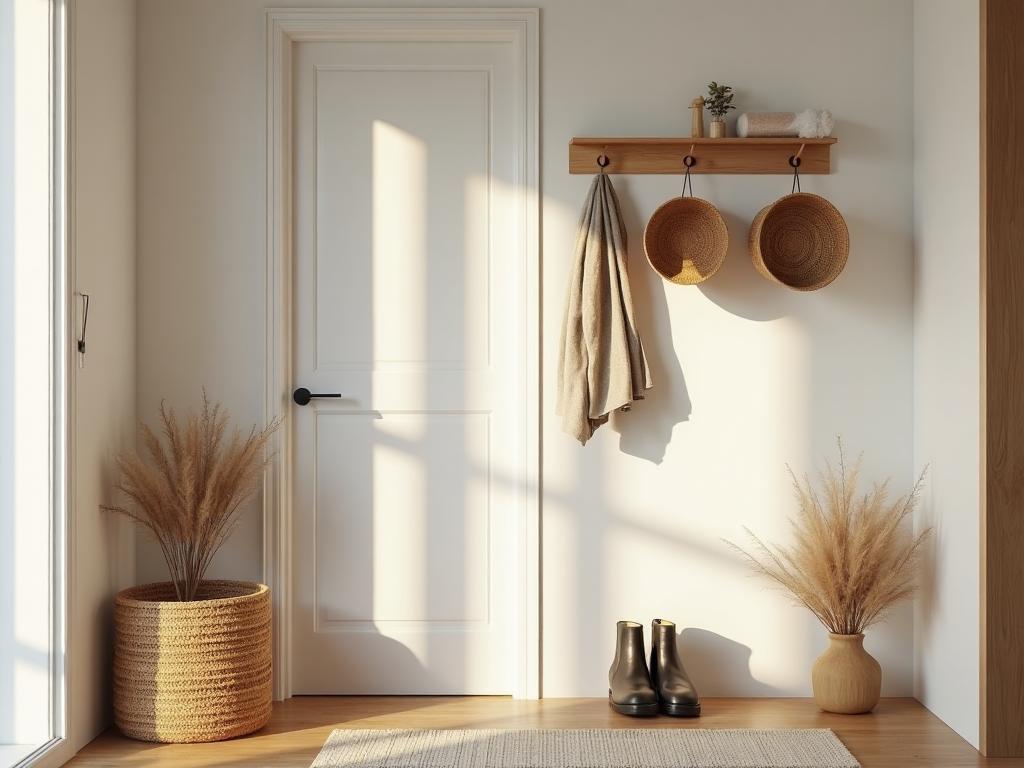
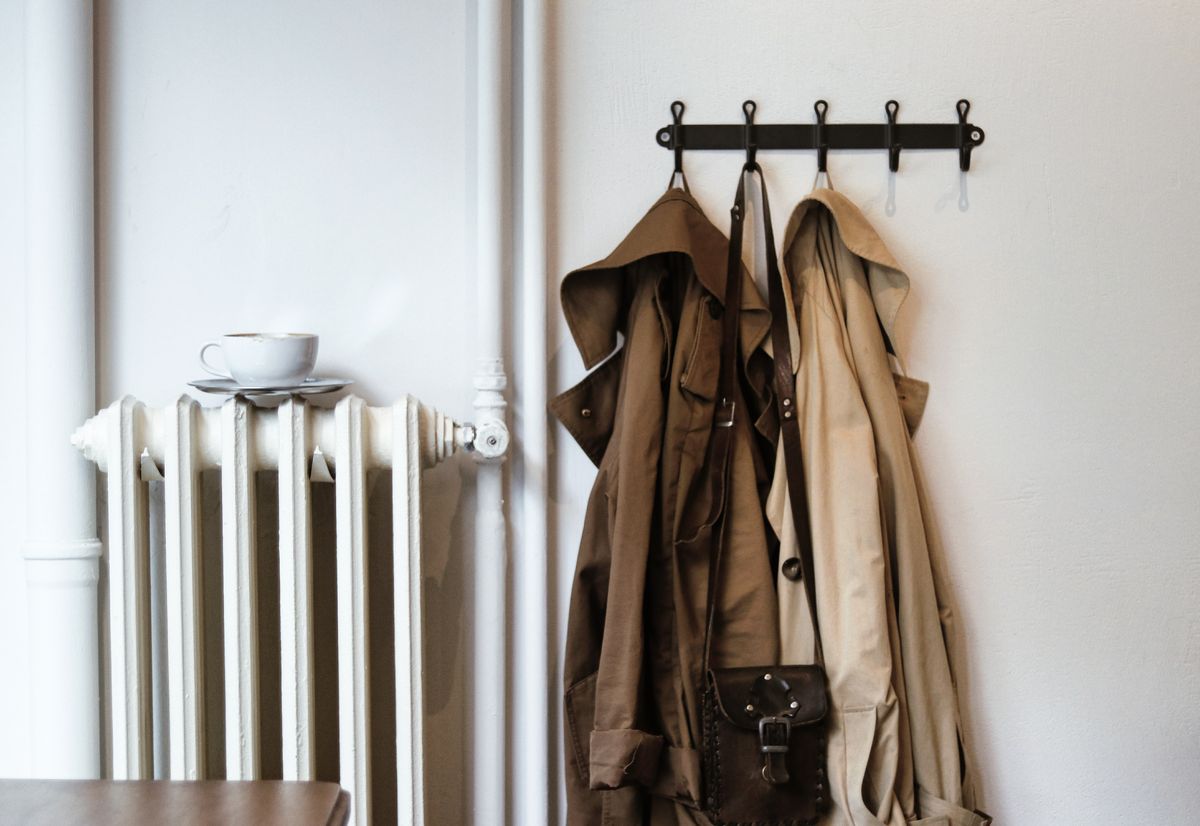
Mount a row of hooks at a comfortable height for coats and bags, plus a couple of small hooks at eye level for keys and sunglasses. This creates a full entryway system in an apartment with no closet and no room for a coat rack, using only the vertical face of a wall.
Give each person in the household their own hook if you share the space. Assigned hooks stop the daily "where are my keys" hunt and keep the entry clear, which matters enormously in a small apartment where the door opens directly into the living space.
Use Them Inside Cabinet Doors
The inside of every cabinet door is flat, smooth, hidden, and almost always empty — nearly perfect conditions for adhesive hooks.
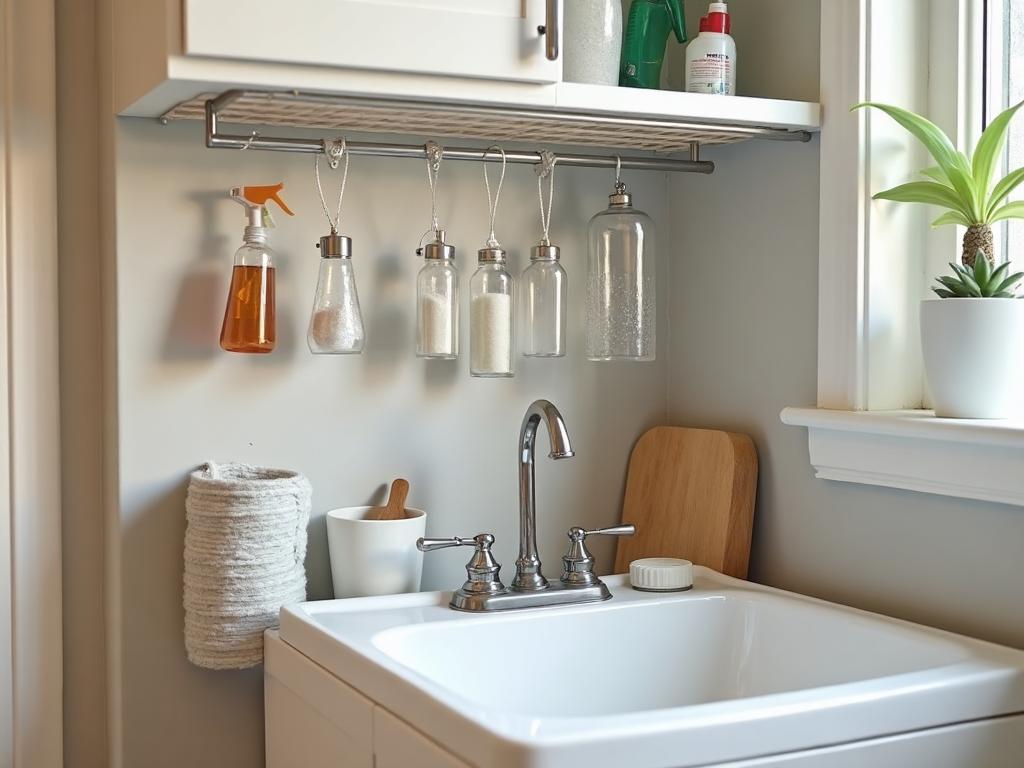
In the kitchen, mount hooks inside cabinet doors to hang measuring cups, oven mitts, and pot lids. Under the sink, use them for scrub brushes and rubber gloves. In the bathroom vanity, hang hair tools and small bags. Each hook moves an item off a crowded shelf and onto a surface that was contributing nothing.
Because these hooks are concealed behind closed doors, they add real storage without making the apartment look busier. This combination of invisible and functional is exactly what small-space organization needs.
Add Bathroom Storage Without Drilling
Bathrooms in small apartments are typically the tightest room in the place, and drilling into tile is both risky and often prohibited by a lease.
Use adhesive hooks for towels, robes, and loofahs on the wall or the back of the door. Add small hooks inside the vanity for cords and brushes. Choose hooks rated for humidity and water exposure, since standard adhesive can weaken in a steamy bathroom over time.
Apply them well away from direct shower spray where possible, and press them onto glossy tile or painted drywall rather than textured or matte surfaces, which give adhesive far less to grip.
Create Hanging Storage in Closets
Closets in small apartments waste space on their side walls and doors, and adhesive hooks reclaim it without any hardware.
Mount hooks on the closet side walls to hang belts, scarves, hats, and bags — items that consume disproportionate space when folded on a shelf. Add hooks to the inside of the closet door for a second layer of accessible hanging storage.
Because these items are light, small hooks work fine, and you can place a lot of them. A closet wall covered with a grid of small hooks holding accessories frees up an entire shelf for folded clothing.
Manage Cables and Small Electronics
Cords are a specific and constant clutter problem in small apartments, where desks, nightstands, and outlets are all crowded together.
Stick small adhesive hooks under a desk edge or behind a nightstand and route charging cables through them so cords stay off the floor and never disappear behind furniture. Use a hook beside the bed to hold a charging cable at reach, or on the wall to hang headphones and a remote.
This single application dramatically reduces visual clutter, because tangled visible cords make a small room feel far messier than it actually is.
Hang Light Decor and Functional Displays
Adhesive hooks let renters hang things they would otherwise not risk, which matters for making a small apartment feel like home rather than a temporary box.
Use them for lightweight framed art, string lights, hanging plants in light pots, and wall-mounted baskets. A hook holding a small wall basket creates storage where none existed, ideal for mail, keys, or bathroom items in a spot too narrow for furniture.
Stay strictly within the weight limit for anything overhead, and avoid hanging heavy mirrors or large frames on adhesive alone. For those, a proper wall anchor is the right tool even in a rental.
Remove Them the Right Way
The whole promise of adhesive hooks is damage-free removal, and that only holds if you take them off correctly. Yanking a hook straight off the wall is what tears paint.
Locate the pull tab at the bottom of the strip, then pull it slowly straight down along the wall — not outward. Stretch it steadily until the adhesive releases. Warming the strip briefly with a hairdryer softens the adhesive and makes removal even cleaner on older installations.
Done properly, the hook comes off leaving the wall exactly as it was, which is why adhesive hooks remain the single most useful damage-free organization tool available to anyone renting a small apartment.