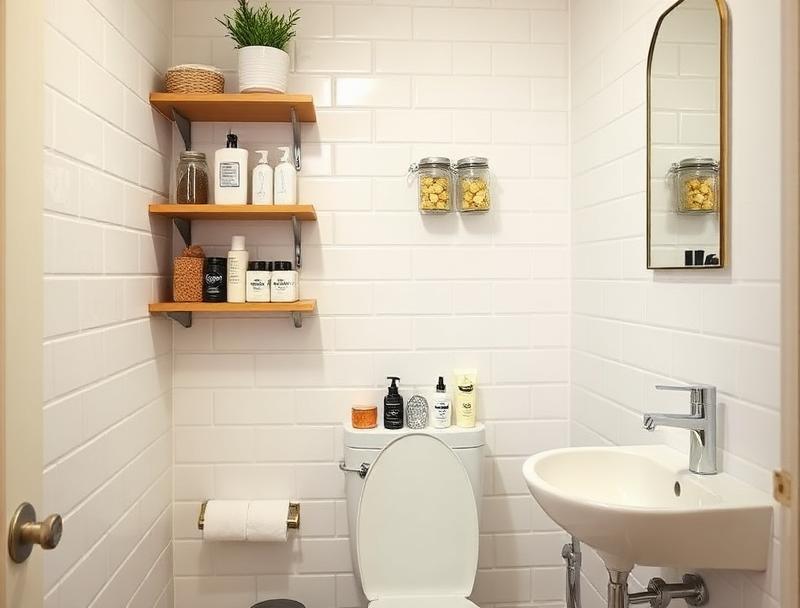
Once you have decided how to arrange your bathroom, the next question is what to actually buy. The right small apartment bathroom storage ideas are less about rearranging what you own and more about choosing pieces that add measurable capacity to a room that may be under 40 square feet.
This guide focuses on the storage pieces themselves: which containers, carts, and modular systems earn their footprint in a tiny bathroom, how to size them before you buy, and how to keep every purchase damage-free so you get your deposit back. If you want a room-by-room routine instead, start with our guide to bathroom organization and come back here when you are ready to shop.
Measure Before You Buy Anything
The most common storage mistake in a small bathroom is buying a piece that almost fits. Before ordering anything, record four numbers: the clear width beside the toilet, the depth from the wall to the edge of the door swing, the interior height under the sink, and the height of the tallest bottle you own.
That last number matters more than people expect. A shelving unit with 9-inch clearance will not hold a standard pump bottle upright, which forces you to lay products on their side and wastes the shelf. Write the four measurements in your phone's notes app so you can check them while shopping.
Also measure your door swing radius. In many apartment bathrooms the door opens inward and sweeps across the only usable floor strip, which immediately rules out floor-standing units deeper than about 10 inches.
Build a Modular Bin System Instead of Buying Randomly
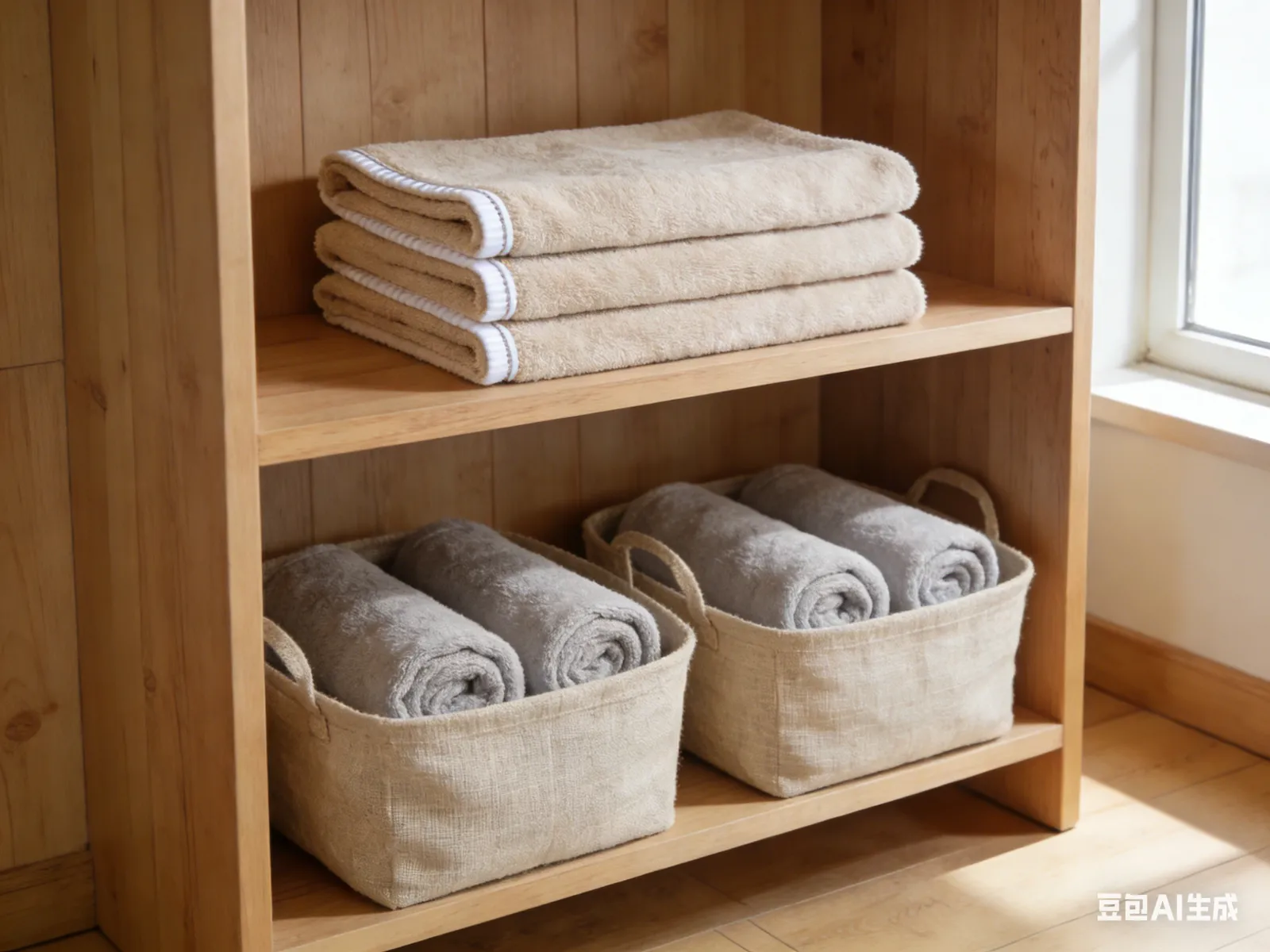
Mismatched containers waste space at their edges. A modular system, where every bin is the same width or a clean fraction of it, lets you fill a shelf edge to edge with no dead gaps.
Pick one bin footprint and buy it in two or three heights. Short bins hold daily items on open shelves; tall bins hold backstock under the sink. Because they share a footprint, you can rearrange them later without buying anything new. Look for bins with a lip or handle cut into the front so you can pull them out one-handed with wet hands.
Skip lids for anything you use daily. Lids add height, slow you down, and in a humid bathroom they trap moisture against damp items. Reserve lidded containers for cotton pads, bath salts, and long-term backstock.
Use a Narrow Rolling Cart for the Gap Beside the Toilet
Nearly every apartment bathroom has a 6 to 10 inch gap between the toilet and the wall or vanity. A slim rolling cart is the single highest-value purchase for that slot because it converts unusable floor into three tiers of storage.
Choose a cart on casters rather than fixed feet. You can roll it out to clean behind the toilet, which is otherwise one of the hardest spots in the apartment to reach. Metal mesh carts drain and dry faster than solid plastic in a steamy room.
Load the cart by frequency, not by category: daily items on the top tier at hand height, weekly items in the middle, refills and cleaning supplies on the bottom where splashes do the least harm.
Choose Stackable Over Wide Whenever Possible
In a bathroom, unused vertical air inside a cabinet is usually the largest wasted volume you have. Under-sink cabinets are frequently 20 inches tall but hold a single layer of bottles.
Stackable bins, riser shelves that straddle the plumbing trap, and two-tier turntables all convert that headroom into usable layers. A U-shaped under-sink shelf is worth seeking out specifically because it fits around the drain pipe instead of forcing you to work around it.
When comparing two products of equal price, the one that stacks is almost always the better buy in a small bathroom, because it can grow with you rather than needing to be replaced.
Prefer Damage-Free Mounting Hardware
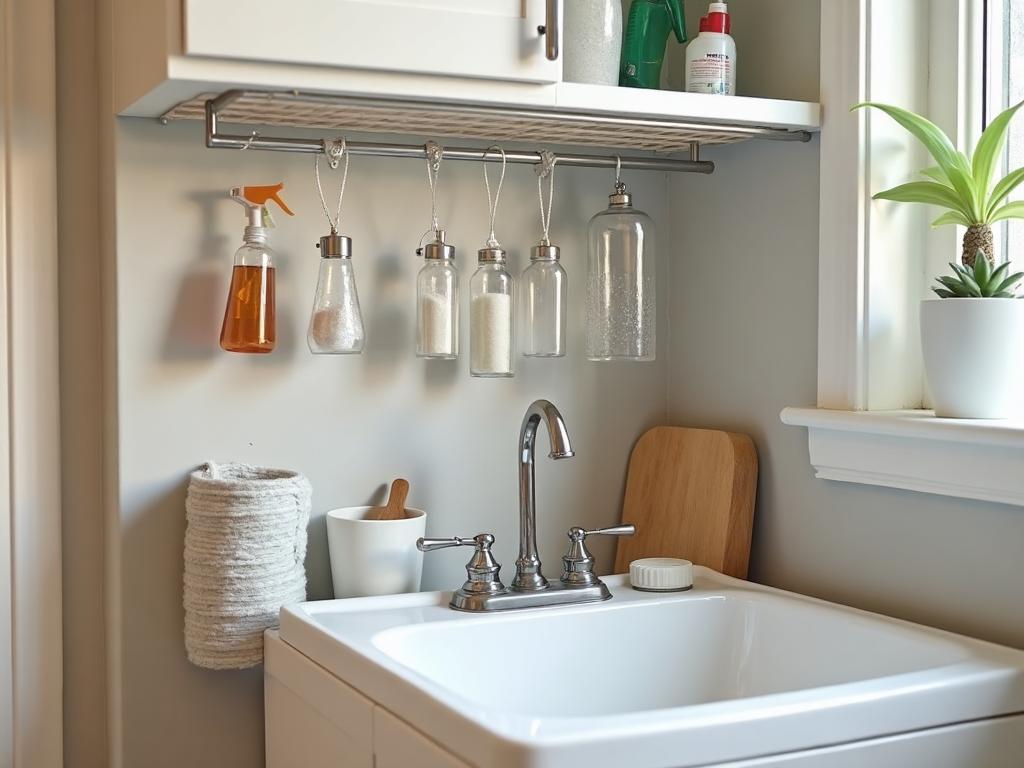
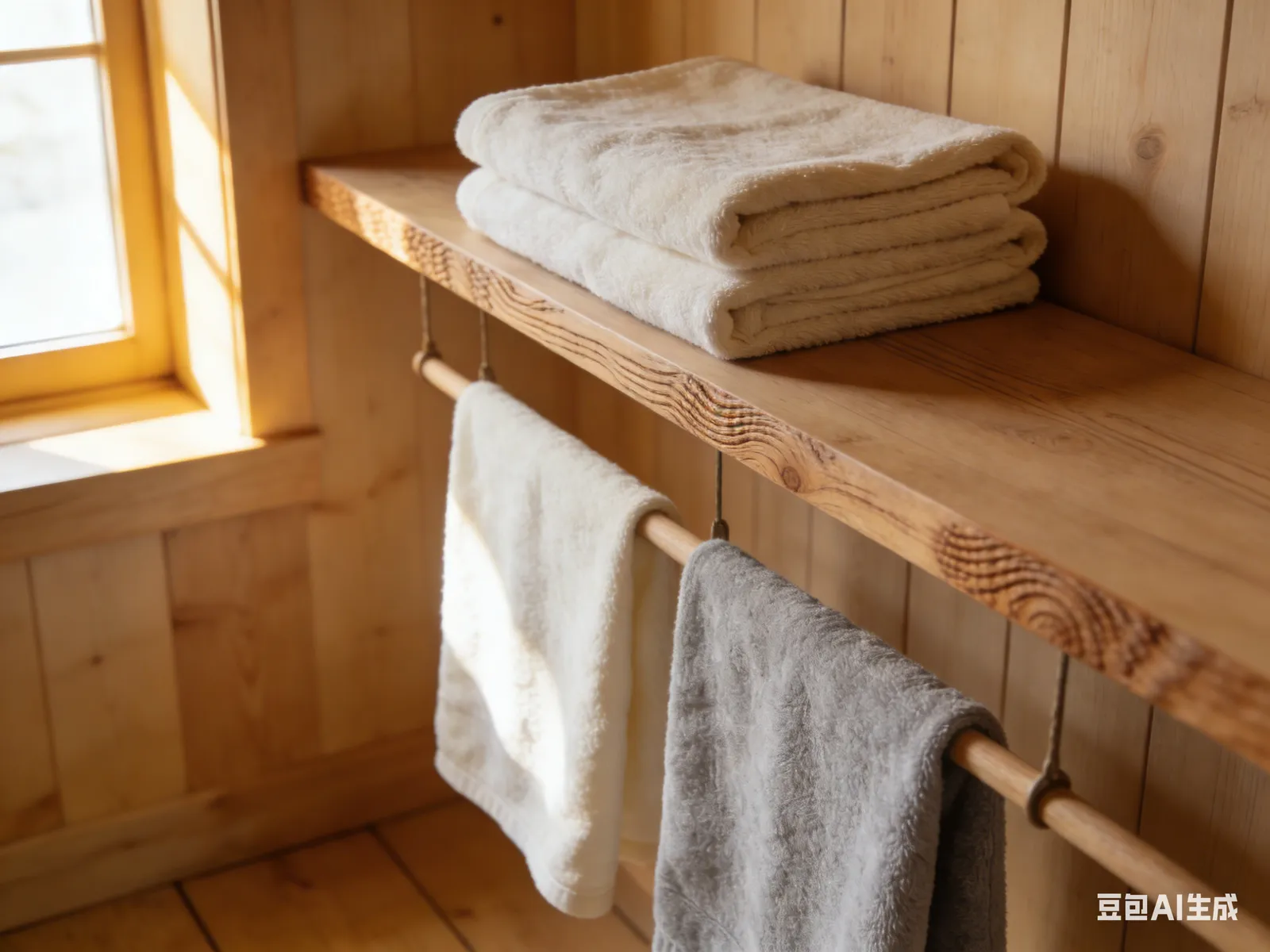
If you rent, the hardware you choose determines whether storage costs you your deposit. Tension-mounted poles, over-door hooks, adhesive rails, and suction shelves all add capacity without a single hole in the wall.
Adhesive strips fail in bathrooms for one predictable reason: they are applied to a surface that still holds soap film or moisture. Wipe the spot with rubbing alcohol, let it dry fully, press the strip for thirty seconds, and wait an hour before loading it. Done properly, an adhesive rail will hold a towel for years.
Match the mount to the surface. Suction cups need smooth glass or glazed tile and will not hold on textured or matte finishes. On painted drywall, over-door hardware is more reliable than adhesive.
Pick Materials That Survive Humidity
A bathroom cycles between damp and dry several times a day, and that cycle destroys the wrong materials. Untreated wicker sheds and grows mildew in the seams. Particleboard swells at the edges. Bare steel wire spots with rust and stains light towels.
Powder-coated metal, polypropylene, sealed bamboo, and coated wire all hold up well. If you want the look of natural fiber, choose a plastic-woven basket that reads as rattan but wipes clean, and keep genuine wicker for items stored away from the shower.
Check whether a piece can go in the dishwasher or be rinsed in the shower. Anything holding razors, toothbrush cups, or soap dishes will need real cleaning, and a container you cannot wash quickly becomes the dirtiest thing in the room.
Add One Piece of Furniture That Does Double Duty
If your bathroom has even a small clear footprint, one well-chosen furniture piece can outperform several small organizers.
A narrow storage stool gives you a place to sit while it hides towels inside. A slim ladder shelf leans against the wall with almost no depth and holds four tiers of rolled towels. A mirrored cabinet replaces a plain mirror you already have and adds enclosed storage without changing the room's footprint at all.
Limit yourself to one such piece. Two competing furniture items in a small bathroom will make the room feel tighter than the storage they add is worth.
Cap Your Inventory Instead of Adding Storage
Storage capacity solves a shortage; it does not solve accumulation. If you keep buying organizers, the real problem is usually volume.
Set a container limit per category: one bin for hair products, one for skincare, one for first aid. When a bin is full, the next purchase in that category has to wait. This constraint is far more effective than adding another shelf.
Do a quick audit twice a year. Discard expired sunscreen and medication, consolidate duplicate half-empty bottles, and note which containers were never full. Those empty containers are your signal that you already own enough storage.
Where to Spend and Where to Save
Spend on the pieces that carry weight or attach to a surface: the rolling cart, the over-door rack, and any adhesive rail holding towels. Failure in these is either a mess or wall damage.
Save on bins, trays, and drawer dividers. Discount-store containers perform nearly identically to premium versions once they are hidden inside a cabinet, and buying cheap here lets you experiment with sizing before committing.
One splurge that consistently pays off is a good over-door organizer, because the back of the bathroom door is often the last completely unused surface in the entire apartment.