Most small apartments were never designed with a real pantry in mind. Instead, you get one narrow cabinet, a slice of closet, or a few shelves shared with everything else in the kitchen. The good news is that with the right small apartment pantry organization ideas, even a single cabinet can hold a surprising amount of food while staying easy to shop from.
A well-organized pantry is not about owning more storage bins. It is about seeing what you have, reaching it without unstacking three things, and never buying a second jar of something you already own. This guide walks through how to build that system in a genuinely small space, from the first purge to the containers that are actually worth buying.
Start by Emptying and Grouping Everything
Before you organize, you need to know what you are working with. Pull every food item out of the cabinet and set it on the counter or table. This is the only reliable way to find the expired cans, the duplicate spices, and the half-empty bags hiding at the back.
Check every date and discard anything past its prime. Then sort what remains into broad categories: baking, breakfast, canned goods, grains and pasta, snacks, and condiments. You will almost certainly discover you own three types of the same thing, which is the single biggest cause of pantry overflow in small apartments.
Wipe down the empty shelves before anything goes back. Starting from a clean, empty surface makes the layout decisions in the next steps far easier, and it is the one moment when reaching the back corners is effortless.
Assign Zones Based on How Often You Reach for Things
The most useful principle in a small pantry is that not all shelf space is equal. The shelves at eye and hand level are prime real estate; the top shelf and the deep back corners are not. Assign each zone based on frequency of use rather than category alone.
Keep daily items — coffee, cereal, cooking oil, the snacks you actually eat — at the front of the most accessible shelf. Put weekly items like pasta, rice, and canned goods on the shelves just above or below. Reserve the top shelf for backstock and rarely used specialty ingredients, and store the heaviest items low so nothing dangerous sits overhead.
This frequency-based layout means the things you touch ten times a week are never behind the things you touch twice a year. In a small space, that difference is what keeps the pantry from sliding back into chaos within a month.
Decant Dry Goods into Uniform Containers
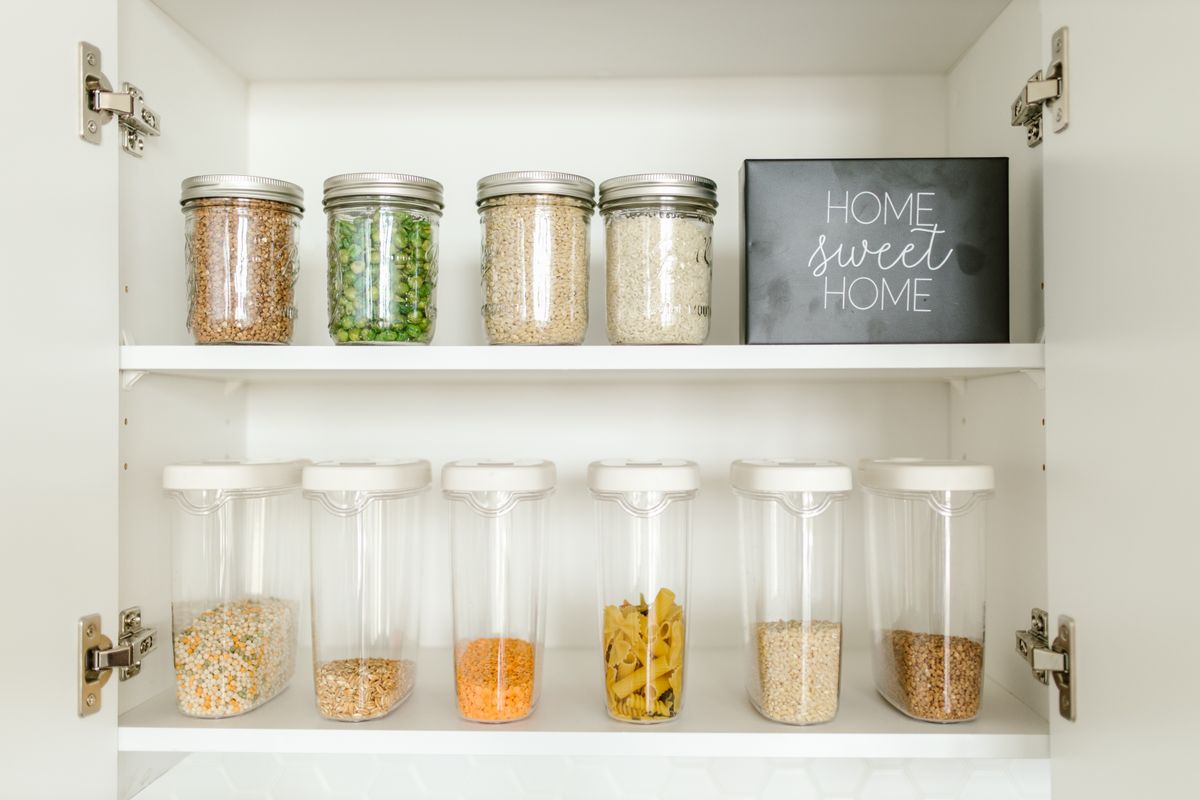
Bags and boxes are the enemy of small-pantry efficiency. They come in dozens of shapes, they tip over, they tear, and they waste the air around them. Decanting flour, rice, pasta, cereal, and snacks into uniform airtight containers can reclaim a shocking amount of usable volume.
Choose square or rectangular containers rather than round ones. Round jars leave triangular gaps at every point where they touch, while square containers sit flush against each other and against the wall, using every square inch of shelf. Buy one or two sizes and stick with them so they stack and line up cleanly.
Add a small label to each container with the contents and, for baking items, the cooking instructions clipped from the original packaging. Clear containers let you see when something is running low at a glance, which prevents both overbuying and the unpleasant surprise of an empty flour jar mid-recipe.
Use the Back of the Pantry Door
The inside of a pantry or cabinet door is often the single most wasted surface in a small kitchen. An over-the-door organizer instantly adds a full extra layer of shallow storage without touching your existing shelves.
Over-door racks are ideal for spices, packet mixes, foil and wrap boxes, and small snacks — anything shallow that tends to get lost behind taller items on a regular shelf. Because everything sits in a single visible row, you can see your entire spice collection at once instead of digging through a drawer.
If you rent and cannot drill, choose an over-the-door rack that hooks over the top edge, or use damage-free adhesive bins. Wipe the door with rubbing alcohol first so adhesive mounts actually hold, and give them an hour to set before loading.
Add Risers and Turntables for Depth
Deep shelves are a trap in small pantries: items disappear into the back and are forgotten until they expire. Two inexpensive tools solve this — shelf risers and turntables.
A stepped riser lets you see the cans in the back row over the tops of the front row, turning a deep shelf of hidden inventory into a visible display. This works beautifully for canned goods and short jars that would otherwise stack into an unstable, invisible pile.
A turntable, or lazy Susan, tames the deep corner and the awkward collection of oils, vinegars, and sauces. One spin brings the back bottle to the front, so you never knock over five things to reach the one you want. Choose a turntable with a raised lip to keep bottles from sliding off.
Corral Small and Loose Items in Bins
Individual snack packets, seasoning envelopes, tea bags, and stock cubes are the confetti of the pantry — small, light, and impossible to keep tidy loose. Group them into a few labeled bins that you can pull out like a drawer.
A single "snacks" bin, a "baking extras" bin, and a "tea and coffee" bin turn dozens of scattered small items into three tidy units you can lift out, shop from, and slide back. When guests or roommates need something, they pull the relevant bin instead of excavating the whole shelf.
Clear bins are best so you can see the contents, but even opaque bins work well if you label the front. The key is that every loose item belongs to a bin, so nothing floats free to create the impression of clutter.
Store Backstock Separately from Daily Stock
One reason small pantries feel overcrowded is that backup supplies mix in with everyday items. When your third can of tomatoes sits beside the one you are about to open, the shelf looks full even when you are almost out of everything else.
Designate a specific spot — the top shelf, a bin, or a nearby closet — for overflow and backstock. Shop from your daily zone, and only refill it from backstock when it runs low. This mirrors how a store keeps a small display shelf stocked from a back room, and it keeps your working shelves calm and shoppable.
This separation also makes it obvious when you are genuinely low on something, so your grocery list reflects reality instead of guesswork.
Track Inventory to Stop Overbuying
In a small apartment, every duplicate jar is stealing space you do not have. A lightweight inventory habit prevents the slow creep of "I think we're out" purchases that end up doubled.
Keep a small dry-erase board or a running note on your phone listing staples that are running low. Update it the moment you open your last one, not when you next go shopping. This single habit does more to keep a small pantry manageable than any container, because the best way to save space is to not bring home things you already have.
Do a five-minute check before each grocery trip. Glancing at clear containers and your low-stock list takes almost no time and reliably prevents the second bag of rice that has nowhere to go.
Maintain the System with a Weekly Reset
Any pantry system drifts without maintenance, and small ones drift fastest because there is no slack to absorb disorder. A brief weekly reset keeps everything working.
Once a week, take two minutes to pull expired items, wipe any spills, and return stray packets to their bins. Right after unpacking groceries is the ideal moment — decant new dry goods immediately, move duplicates to backstock, and put daily items at the front. Handling it once, at the point of entry, prevents the pile-up that makes reorganizing feel like a chore.
With uniform containers, clear zones, and a quick weekly habit, even a single-cabinet pantry can stay organized, fully stocked, and genuinely pleasant to use in the smallest of apartments.