Book lovers in small apartments face a dilemma that every literature enthusiast knows well: how do you keep your beloved book collection while maintaining a livable, organized space? These small apartment organization hacks for books offer creative solutions that let you have both – a comprehensive library and a beautifully organized home. From innovative storage ideas to digital integration strategies, these hacks transform the challenge of book storage into an opportunity for creative expression and functional design.
Invisible Floating Shelves: The Art of Disappearing Storage
Create the illusion of floating books using L-shaped brackets hidden by the bottom book in each stack. This minimalist, artistic display technique maximizes wall space while creating a sleek, modern aesthetic that doesn't overwhelm small rooms. The key to successful invisible shelving lies in careful planning – measure your largest books to ensure adequate support and choose brackets that can bear the weight of your entire collection distributed across multiple mounting points.
When installing floating shelf brackets, use heavy-duty wall anchors rated for the total weight of your books. Consider the wall material – concrete and masonry walls can support more weight than drywall alone. For particularly large collections, alternate between visible and invisible shelving to balance aesthetic appeal with structural requirements. Group books by size on each shelf to create visual harmony and prevent top-heavy arrangements.
The floating effect is most dramatic when books are arranged in carefully planned stacks rather than individual placement. This creates a sculptural quality that transforms your library into a work of art. Consider arranging books both horizontally and vertically within the floating system to create visual interest while maximizing storage capacity.
Window Seat Library: Combining Comfort and Storage
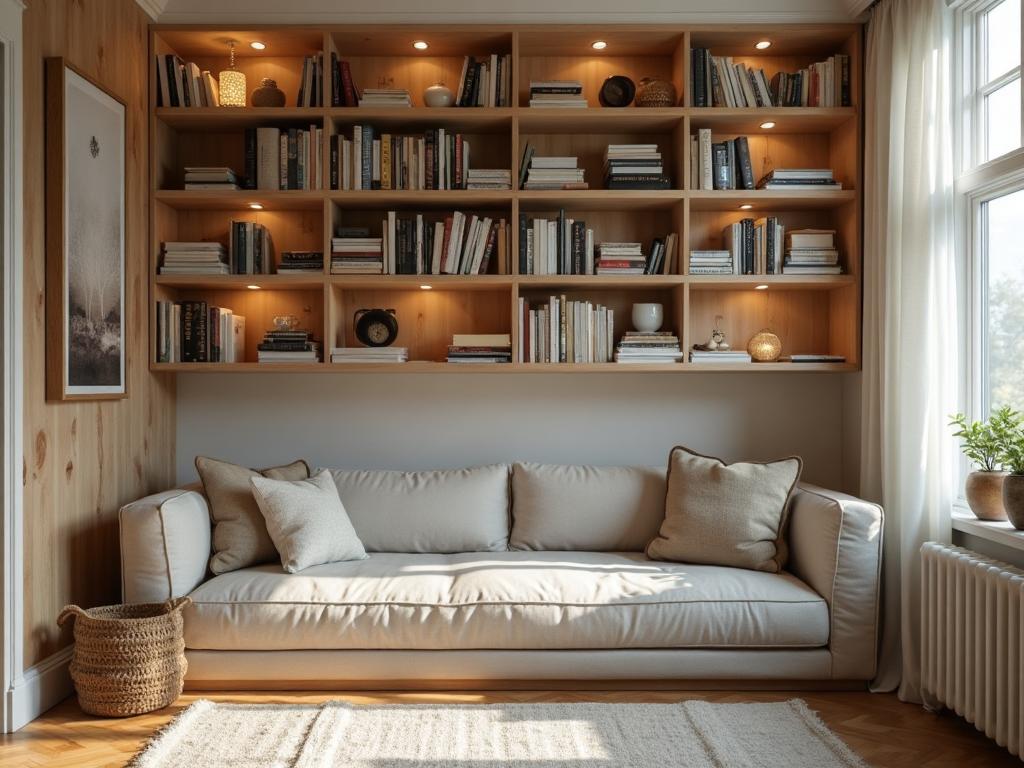
Transform window areas into multi-functional reading nooks with built-in bookshelves, combining comfortable seating with valuable storage. Custom-built window seats can incorporate shelving below seating areas, creating a cozy reading retreat that doesn't sacrifice book storage. Even simple furniture pieces like storage benches or ottomans with book storage capabilities can serve this dual purpose effectively.
When planning a window seat library, consider the window's orientation and natural light patterns. South-facing windows provide ideal reading light, while north-facing windows offer consistent, softer illumination. Ensure adequate ventilation around books stored in window seats to prevent moisture buildup and potential damage to your collection.
The storage compartments in window seats work exceptionally well for books you're currently reading, seasonal favorites, or reference materials that benefit from being easily accessible. Consider incorporating adjustable shelving to accommodate different book sizes and allow for future reorganization as your collection evolves.
Staircase Book Storage: Utilizing Architectural Features
In apartments with stairs, the space under each step represents untapped storage potential that can be transformed into custom book storage. Whether you have a straight staircase or curved steps, custom inserts or simple shelving systems can transform this often-overlooked space into a functional library that runs the length of your stairway.
For straight staircases, measure the width and height of each step's underside to create custom-sized storage compartments. Consider using fabric-lined drawers that slide out smoothly for easy access to stored books. For curved staircases, flexible shelving systems or adjustable compartment dividers can accommodate the varying dimensions of different steps.
This storage system works best for books you don't access frequently – seasonal reading, reference materials, or parts of your collection you're willing to archive. Consider grouping books by category within the step storage to make retrieval easier when you do need to access specific titles.
Headboard Bookshelf: Bedroom Reading Command Center
Replace traditional headboards with bookshelf-style designs to create a reading-focused bedroom environment that keeps current reads within arm's reach. This clever storage solution transforms your bedroom into both a rest space and a library, perfect for bedtime reading or morning browsing sessions. Choose headboard designs that complement your bedroom decor while providing adequate storage capacity.
Consider the height of books stored in headboard shelving to ensure they don't interfere with comfortable sleeping positions. Store shorter books and paperbacks in easily accessible lower shelves, while taller books and decorative volumes can occupy higher storage areas. LED strip lighting can be integrated into headboard book storage to create ambient lighting for nighttime reading.
This system works particularly well for books that complement the bedroom environment – poetry collections, short story anthologies, or books you're currently reading. Reserve bedroom book storage for materials that enhance relaxation and reflection rather than technical or reference materials better suited to other areas of your apartment.
Color-Coordinated Display: Books as Artistic Expression
Organize books by spine color to create a visually stunning display that transforms your collection into a work of art. This rainbow organization method works particularly well in open shelving systems where book spines are visible from multiple angles. While this system may require a learning curve for finding specific titles, the aesthetic payoff and creative expression often make the trade-off worthwhile for passionate readers.
To implement effective color coordination, create color families rather than strict individual color matching – group blues and greens together, warm colors like reds and oranges, and neutral tones like browns and grays. This approach creates flowing color gradients that are easier to navigate while maintaining visual appeal. Consider alternating between solid colors and patterned spines to create visual rhythm and prevent monotony.
This system works beautifully with books that have uniform spine designs, such as Penguin Classics, Oxford World's Classics, or other publisher series with consistent formatting. Consider using this approach for your most visually appealing books while organizing less attractive covers using more functional systems in less visible storage areas.
Multi-Functional Furniture Integration
In small apartments, every piece of furniture should serve multiple purposes, and book storage is no exception. Storage ottomans, bookshelf room dividers, and benches with built-in book storage provide dual functionality that maximizes both storage capacity and living space efficiency. These solutions are particularly valuable in studio apartments where furniture needs to be highly functional.
Storage ottomans can hold dozens of books while providing comfortable seating or footrest functionality. Choose ottomans with removable tops or zippered compartments for easy access to stored books. Bookshelf room dividers create separate living zones while providing substantial storage capacity, making them ideal for studio apartments or open-concept living spaces.
End tables, coffee tables, and nightstands with built-in book storage work well for frequently accessed materials. Place current reads, magazines, or reference materials in easily accessible furniture storage while using wall and dedicated book storage for less frequently accessed books.
Digital Integration Strategies: The Hybrid Approach
The digital transition doesn't mean abandoning physical books entirely – instead, consider a thoughtful hybrid approach that maximizes the benefits of both formats. Keep physical copies of your absolute favorites, books with significant personal meaning, or titles you'll reference frequently, while digitizing books you own but rarely use. This approach frees substantial space while preserving access to your entire collection.
E-readers and tablets offer excellent solutions for maintaining reading habits while reducing physical storage needs. Many devices can store hundreds or thousands of books while providing features like adjustable text size, built-in lighting, and note-taking capabilities. Consider which books you re-read frequently versus those that serve as reference materials to make informed decisions about which titles to keep physically.
Digital organization strategies can complement physical book storage through apps and cloud services that catalog your physical collection, making it easier to locate specific titles among your remaining books. QR codes or simple cataloging systems can link physical books to digital notes, reviews, or related materials, creating a comprehensive literary ecosystem.
Creative Corner Solutions and Vertical Maximization
Corner spaces and high wall areas in small apartments often become dead zones, but specialized corner bookcases and floating corner shelves transform these awkward areas into valuable storage opportunities. Corner bookcases fit flush against walls, utilizing space that might otherwise remain empty, while floating corner shelves create the illusion of books emerging from the wall itself.
When designing corner book storage, consider the traffic flow around these spaces. Corner units should enhance rather than obstruct movement through your apartment. Choose corner bookcases with adjustable shelves that can accommodate various book sizes and allow for future reorganization. For floating corner shelves, ensure adequate wall support and distribute weight evenly across multiple mounting points.
Vertical maximization strategies include installing bookshelves from floor to ceiling in narrow spaces, creating floor-to-ceiling library walls that draw the eye upward and make rooms feel larger. Consider using ladders or step stools for accessing higher books, and reserve top shelves for books used less frequently.
Maintaining Your Book Organization System
Successful book organization in small apartments requires ongoing maintenance and periodic reassessment of your storage needs. As your collection grows and evolves, your organization system should adapt accordingly. Regular reviews help identify books you no longer need, books that need better storage solutions, and opportunities to optimize your existing system.
Consider implementing a seasonal rotation system, where you swap out books based on reading habits and seasonal interests. Keep frequently read materials in easily accessible locations while storing seasonal or category-specific books in less accessible but secure locations. This approach keeps your most valued books readily available while making efficient use of limited storage space.
Remember that the goal of book organization isn't just to store books efficiently – it's to create a system that enhances your enjoyment of reading while maintaining a livable, organized space. With creativity, planning, and the right storage solutions, you can create a book organization system that serves both your literary passion and your lifestyle needs beautifully.