Count the doors in your apartment. Each one has a back side that is flat, vertical, and almost certainly holding nothing. In a small apartment where floor space is fully committed, that adds up to several square feet of completely free storage. These small apartment organization hacks using over-the-door organizers show you how to claim it.
Over-the-door organizers are especially valuable for renters because they require no hardware at all — they simply hook over the top of the door. There is nothing to install, nothing to patch when you leave, and the storage they add is genuinely substantial rather than decorative.
Measure the Door and the Clearance First
Over-the-door organizers fail for one predictable reason: the door will not close afterward. A minute of measuring prevents that entirely.
Check the door's thickness and confirm the hooks will fit over the top without forcing. Then check the clearance between the closed door and the nearest obstruction — the door frame, a wall, a shelf inside the closet. That clearance is the maximum depth your loaded organizer can be.
In tight closets the practical limit is often only three or four inches, which rules out deep pocket organizers but leaves plenty of room for slim racks and shallow pouches. Buy to the measurement rather than to the appealing product photo.
Use Shoe Organizers for Almost Anything but Shoes
The classic clear-pocket shoe organizer is the most versatile storage product available to small apartments, and shoes are arguably its least interesting use.
Hang one inside a closet door and fill the pockets with socks, underwear, scarves, gloves, and small folded items. In a bathroom, the pockets hold toiletries, hair tools, and first aid supplies. In a kitchen or pantry, they hold snack packets, spice jars, and cleaning cloths. Near a desk, they hold cables, chargers, and stationery.
The reason it works so well is that every item sits in its own visible pocket in a single layer. Nothing stacks, nothing buries anything else, and you can see your entire inventory at a glance — which is exactly what small-space storage needs.
Add a Slim Rack for Pantry Overflow
Small apartment kitchens rarely have a real pantry, and the back of a kitchen or pantry door can effectively become one.
An over-the-door wire or plastic rack with several shallow shelves holds cans, jars, spice bottles, and boxes in a single visible row. Because everything sits one item deep, you never lose a jar behind another, which is the main failure of deep pantry shelves.
Keep heavier canned goods on the lower shelves so the loaded organizer does not make the door top-heavy or strain the hooks. Reserve the upper shelves for light packets and spices.
Create Instant Bathroom Storage
Bathrooms in small apartments are typically the tightest room in the place and often have tile you cannot drill into. An over-the-door organizer sidesteps both problems.
Hang a pocket organizer or a slim shelf rack on the back of the bathroom door for toiletries, backup supplies, hair tools, and cleaning products. This frees the vanity and the shower entirely of items that were only there because there was nowhere else.
Choose plastic or coated metal rather than fabric for a bathroom, since fabric absorbs humidity and can develop mildew. Position the organizer so it clears the towel bar and any wall fixtures when the door swings.
Build an Entryway Station on the Door
Many small apartments open directly into the living space with no entry closet at all. The back of the front door can absorb that entire function.
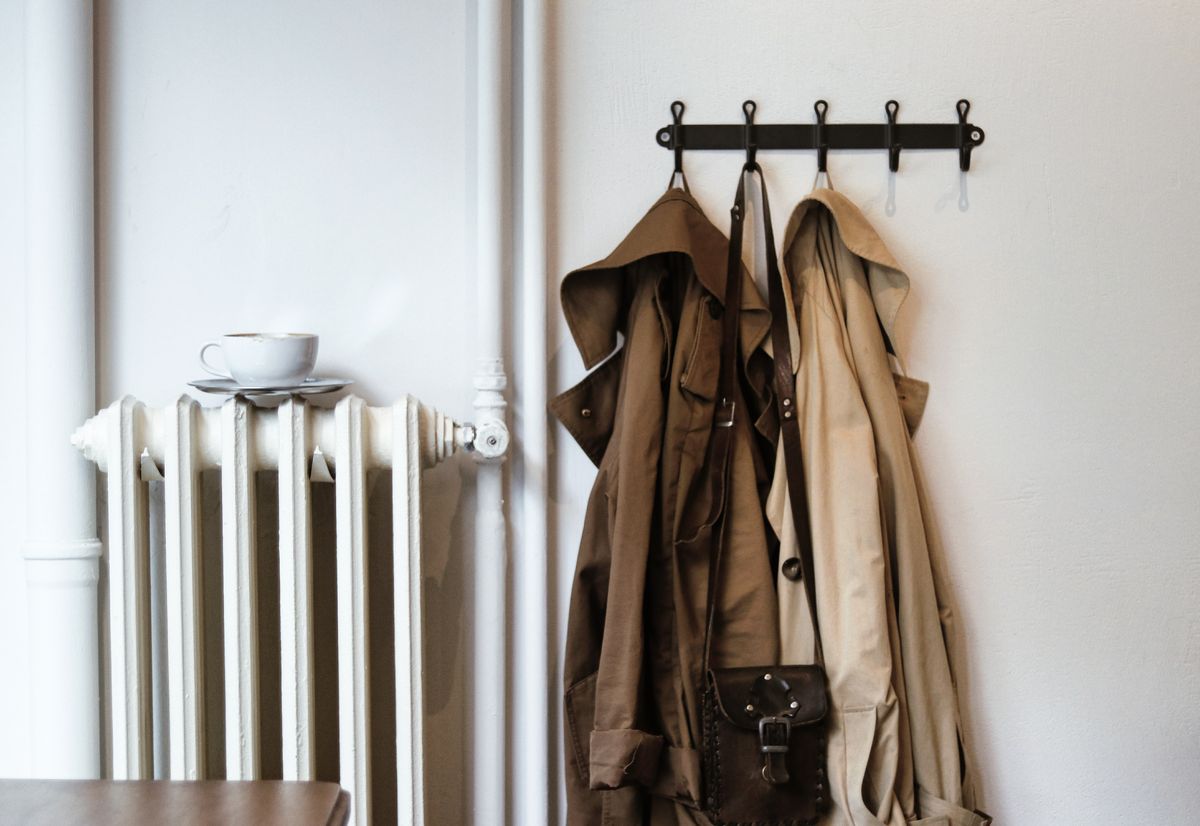
Use an over-the-door organizer for shoes, gloves, umbrellas, reusable bags, and mail, and add an over-door hook rack above it for coats and bags. This creates a complete entry system without a single piece of furniture or any floor space.
Keep the top pockets for small daily items like keys and sunglasses so they are at hand height, and the lower pockets for shoes and bulkier items. Because it is all on the door, it disappears from view whenever the door is open.
Store Cleaning Supplies Behind a Utility Door
Cleaning products are awkward, bulky, and usually crammed under a sink. Moving them to a door frees that cabinet for larger items.
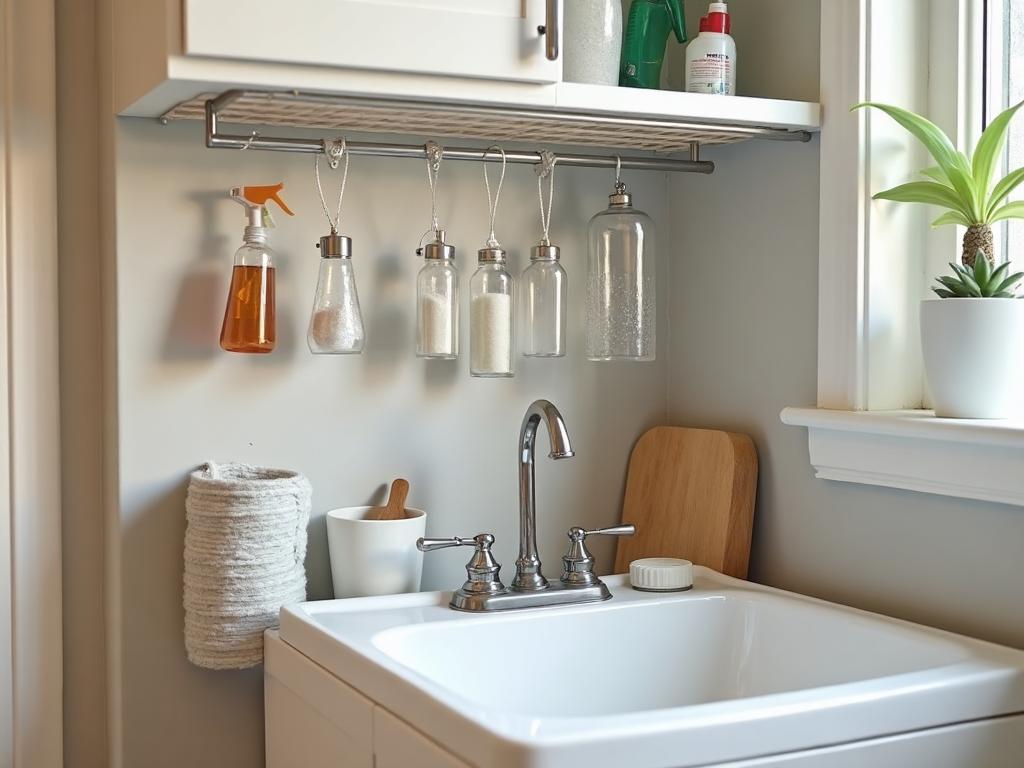
Hang a pocket organizer inside a utility, laundry, or under-stair door and load it with sprays, cloths, sponges, gloves, and brushes. Everything is visible and grabbable, which makes cleaning faster and stops products from multiplying unseen at the back of a cabinet.
Add over-door hooks or a gripper rack on the same door for a broom, mop, or duster. Long-handled tools stored vertically on a door take almost no space and stop falling over, which is a persistent annoyance in small apartments.
Use Over-Door Ironing and Fold-Down Solutions
Some over-the-door products go beyond storage and add function that a small apartment otherwise cannot fit.
An over-the-door ironing board folds flat against the door and drops down when needed, eliminating the need to store a full-size board. Over-door valet rods give you a temporary hanging spot for tomorrow's outfit or freshly ironed clothes, which is genuinely useful when there is no spare furniture surface.
These fold-away solutions follow the core small-space principle: the item exists when you need it and occupies effectively nothing when you do not.
Protect the Door and Manage the Weight
Over-the-door organizers are damage-free in principle, but a heavily loaded one can mark the door or strain the hooks if you are careless.
Choose hooks with a soft or coated finish, or add felt pads where metal meets the door, to prevent scuffing the paint on the top edge. Distribute weight toward the bottom of the organizer and avoid overloading, which can bow the hooks or cause the whole unit to shift when the door swings.
Check the door swings freely and closes fully after loading. If the door now bumps a wall or a shelf, move heavier items lower or switch to a shallower organizer rather than living with a door that no longer closes.
Assign Each Door the Storage Its Room Needs
The most effective over-the-door storage is matched to the room the door serves, so items are stored exactly where they are used.
Walk through the apartment and inventory every door: front door, bedroom, bathroom, closet, kitchen, pantry, utility. Assign each one the category that belongs to its room — toiletries on the bathroom door, food on the pantry door, accessories on the closet door.
Done systematically, the doors in a small apartment can absorb a large share of everything that previously had no home, and they do it without consuming a single square inch of floor.