Organizing a small apartment is challenging enough for one person. Add a partner, their belongings, and their habits, and the same square footage has to work twice as hard. These small apartment organization ideas for couples focus on the part that generic storage advice ignores: how two people share limited space without friction.
The secret to a well-organized shared apartment is not more bins — it is clear systems and agreements. When both partners know where things go, whose space is whose, and how shared areas get maintained, a small apartment can feel calm and spacious even with two people's worth of stuff in it. This guide covers both the physical setups and the shared habits that make them stick.
Divide Closet Space Fairly and Visibly
The closet is the most common flashpoint for couples in a small apartment, because demand almost always exceeds supply. The fix starts with an honest, visible division of the space rather than a vague sense of "your side and mine."
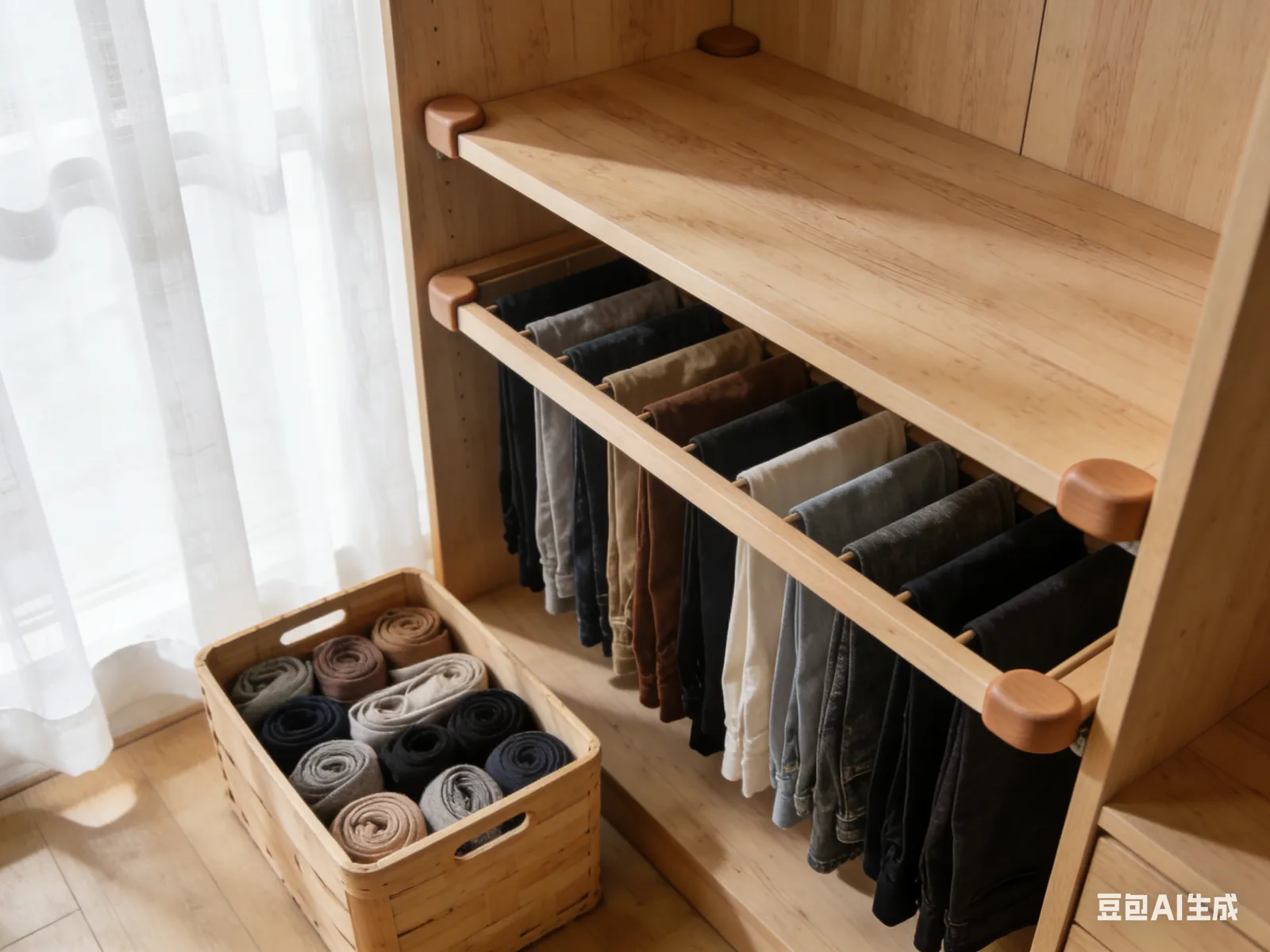
Split the hanging rod with a clear marker so each person has a defined section, and divide drawers and shelves the same way. If one partner has far more clothing, balance it by giving them more closet space while assigning them less of another storage area, like the entryway or bathroom. The goal is a division both people agree is fair, not necessarily an identical one.
Double the closet's capacity with a hanging rod extender that adds a second tier, then give each partner one tier. Reserve the higher, harder-to-reach shelves for off-season or rarely worn items so the prime space stays devoted to daily clothing for both people.
Give Each Person a Personal Zone
Even in the smallest apartment, each partner needs a small territory that is entirely their own. Without it, one person's belongings inevitably colonize every shared surface, which breeds resentment far faster than any storage shortage.
This personal zone can be modest — a nightstand, a single shelf, a drawer, a basket, or a hook by the door. The point is that it belongs entirely to one person, who can keep it however they like without negotiation. A partner who loves a tidy home and one who is more relaxed can coexist happily when each has a zone that runs by their own rules.
Respect the boundary in both directions: the tidy partner does not reorganize the other's zone, and the relaxed partner keeps their clutter contained within theirs. This single agreement resolves a huge share of the daily tension that comes from sharing a small space.
Build Shared Systems for Shared Items
Beyond personal belongings, couples accumulate shared items — kitchen tools, cleaning supplies, documents, electronics, and more. These need systems that both partners understand and can maintain, not just one person's mental map that the other has to guess at.
Set up obvious, labeled homes for shared essentials so that either person can find and return them without asking. A labeled bin for chargers and cables, a specific drawer for takeout menus and manuals, and a clear spot for shared paperwork mean neither partner becomes the sole "keeper" of where everything lives.
The test of a good shared system is whether the partner who did not set it up can still use it. If only one person knows where things go, it is not a shared system — it is a chore that has quietly been assigned to one person, which rarely lasts.
Create a Command Center by the Door
Two people coming and going doubles the flow of keys, wallets, mail, bags, and daily clutter through the entryway. A small command center by the door catches all of it before it spreads into the apartment.
Install two sets of hooks — one per person — for keys, bags, and coats, plus a small shelf or tray for wallets, sunglasses, and daily carry. Add a wall pocket or basket for incoming mail so it never lands on the counter or table. When each partner has a designated landing spot, the "where are my keys" scramble disappears and the entryway stays clear.
Include a shared bowl or dish for the small things that would otherwise migrate all over the apartment — spare change, receipts, hair ties. Emptying it together once a week keeps the command center from becoming a permanent pile.
Double Up on Storage Furniture
When two people share a small space, multi-functional furniture stops being optional and becomes essential. Every piece should either store something, serve two purposes, or ideally both.
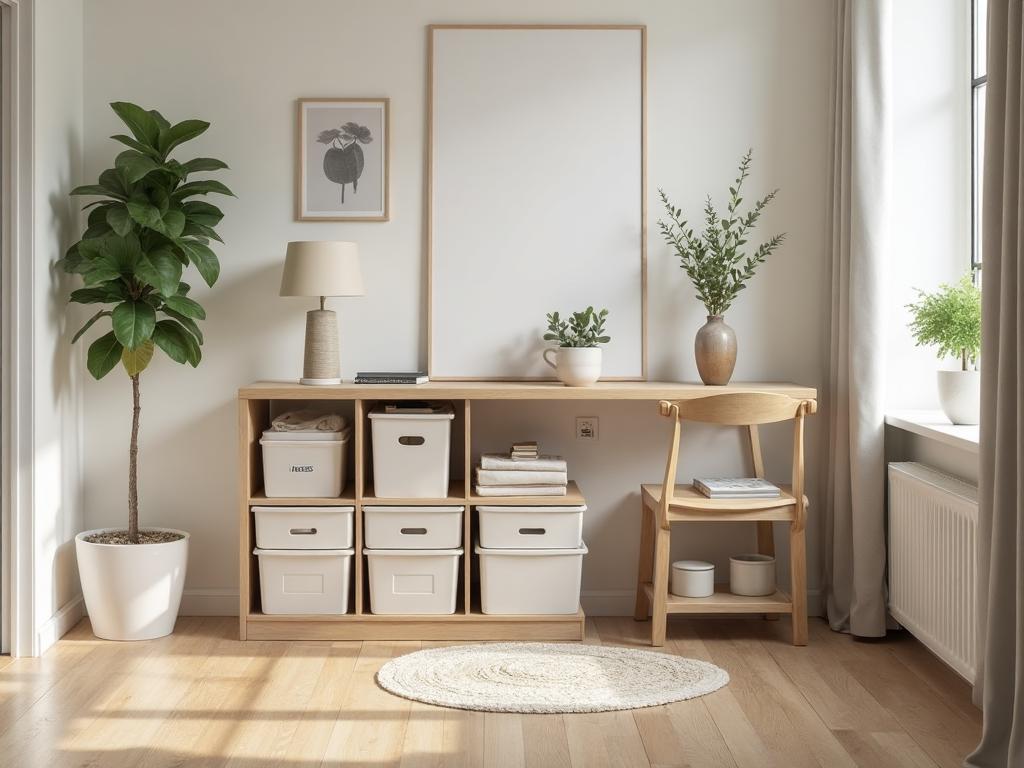
Choose a storage ottoman that holds throws and games while providing extra seating for guests. Pick a bed frame with drawers so each partner claims a set. Use a bench with hidden storage at the entryway that seats you both while stowing shoes. In a shared apartment, furniture that only performs one function is a luxury the floor space cannot afford.
Nightstands with drawers or shelves give each partner private bedside storage without adding footprint, and a narrow console behind the sofa can serve as a shared workspace by day and a drop zone by evening.
Manage Two Wardrobes with Seasonal Rotation
Two wardrobes in one small closet only fit if neither person keeps their entire year's clothing on display at once. Seasonal rotation is what makes shared closet space actually work.
Each season, both partners move out-of-season clothing to under-bed bins, high shelves, or a storage area, keeping only current-season items in the prime closet space. Doing this together at the same time keeps the division fair and turns it into a shared ritual rather than one person's chore.
Pair the rotation with a joint declutter: as you pack away the season, each person sets aside anything they did not wear. Two people generate clutter twice as fast, so a regular shared purge is the counterweight that keeps a small shared closet from overflowing.
Respect Different Organizing Styles
Most couples include one person who is naturally tidy and one who is more relaxed, and pretending otherwise guarantees conflict. Good organization for couples accommodates both styles instead of forcing one person to adopt the other's.
Use closed storage — bins, drawers, cabinets, and doors — so the relaxed partner can stash things quickly while the tidy partner enjoys clear surfaces. What matters to a "neat" person is usually the visible result, not the inside of every drawer, so hiding the mess satisfies both needs at once.
Agree on shared standards for common areas while leaving personal zones to each person's discretion. "The living room stays clear, but your desk is yours" is a compromise that respects both temperaments and prevents the endless low-grade nagging that erodes a relationship in close quarters.
Split Maintenance Fairly
An organized shared apartment stays that way only if both partners maintain it, and unspoken assumptions about who does what are a reliable source of resentment. Make the division explicit.
Agree on who handles which recurring tasks — one person manages the kitchen reset, the other the bathroom, and so on — or trade off on a schedule. What matters is that the load is shared and acknowledged, not that one partner silently absorbs the work of keeping a small space livable for two.
Build in a short shared reset, like ten minutes each evening where both partners tidy shared areas together. Doing it side by side makes it feel like teamwork rather than a chore one person polices, and it prevents the daily drift that a small shared space accumulates so quickly.
Communicate Before You Accumulate
In a small shared apartment, every new possession competes for space you both use, so the most important organizing habit is talking before buying. A quick conversation prevents the slow overflow that two independent shoppers create.
Adopt a shared version of the one-in-one-out rule: when something new comes in, something old goes out, and both partners weigh in on shared purchases that take up common space. This keeps the total volume of belongings stable rather than steadily climbing past what the apartment can hold.
With fair divisions, protected personal zones, shared systems both people understand, and honest communication, a couple can share even a very small apartment while keeping it organized, peaceful, and comfortable for both of them.